





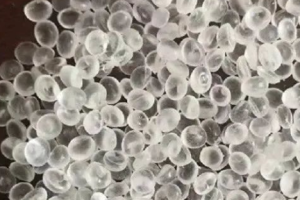
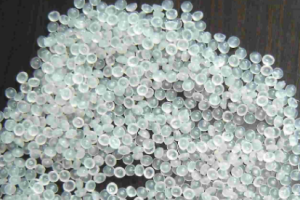







August 29, 2025 – As the polymer materials industry advances towards high-end and functional applications, color masterbatch, a critical carrier that binds pigments/functional additives with resin matrices, plays a pivotal role in determining the performance and processing stability of downstream products. At the heart of masterbatch research, production, and application lies rheological properties—a core factor that not only directly reflects processing behavior but also serves as a sensitive indicator of pigment/additive dispersion and compatibility with base resins. Mastering rheological testing and analysis has become essential for companies aiming to optimize formulations, enhance product quality, and ensure stable processing.
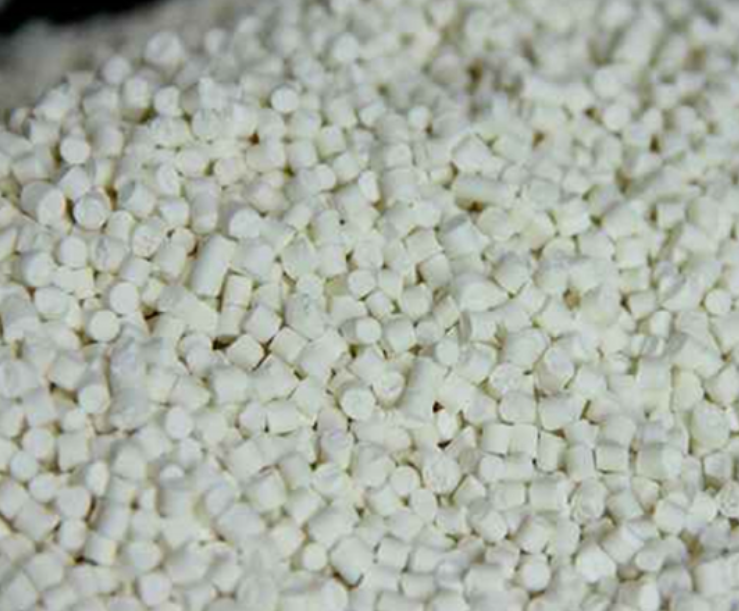
Three Key Roles of Rheology in Masterbatch Performance
1. Processing Performance Indicator
Rheological parameters such as melt flow rate (MFR/MVR) and apparent viscosity dictate how easily masterbatch flows through extruders or injection molding machines, influencing filling efficiency, required processing pressure, and temperature settings. Abnormal rheological behavior can lead to extrusion instability, inconsistent output, surface defects, increased energy consumption, or even equipment damage. Time-dependent viscosity measurements via rotational rheometry help assess thermal degradation risks, guiding optimal processing parameter selection.
2. Dispersion and Microstructure Probe
Undispersed pigment/additive aggregates act like fillers, raising melt viscosity and altering viscoelastic responses. Poor compatibility between additives and resin matrices changes energy dissipation patterns during flow, visible on rheological curves. For specialized systems like conductive carbon black masterbatch or high-loading flame-retardant masterbatch, rheology effectively detects percolation thresholds and network formation, revealing microscopic structural features.
3. Downstream Performance Predictor
Optimal rheological properties correlate with uniform pigment/additive dispersion and strong resin compatibility—foundations for superior mechanical strength, surface quality, and functional stability in final products. Rheological anomalies often serve as early warnings for potential defects, enabling proactive troubleshooting.
Instrumentation: Capillary vs. Rotational Rheometers
Two primary tools dominate masterbatch rheological testing, each offering complementary insights:
Capillary Rheometers
Operating under controlled temperatures, these devices force molten masterbatch through a narrow capillary using pressure, then calculate shear stress, shear rate, and apparent viscosity from pressure drop and flow rate measurements. Key analyses include:
Flow curves (η vs. γ̇): Reveal viscosity trends under high shear rates (mimicking extrusion/injection conditions), with abnormal values indicating processing or strength issues.
Shear-thinning index: Reflects sensitivity to shear rates; poor dispersion alters this behavior.
Entry pressure drop/Bagley correction: Indicates melt elasticity and true shear stress; abnormal values suggest dispersion or compatibility problems.
Melt fracture threshold: Identifies critical shear stress/rate for surface defects like sharkskin; poor dispersion lowers this threshold, narrowing processing windows.
While powerful for high-shear analysis, capillary rheometers struggle with low-frequency measurements and cannot directly quantify elastic moduli.
Rotational Rheometers
Using parallel-plate or cone-plate geometries, these instruments apply controlled strain/stress to melt samples, measuring dynamic responses to extract viscoelastic data. Core tests include:
Dynamic frequency sweeps: Track storage modulus (G’), loss modulus (G”), and loss tangent (tanδ = G”/G’) across frequencies. Low-frequency G’ plateaus or slope changes hint at filler network formation, while tanδ ratios reveal viscosity-elasticity balances.
Dynamic strain/stress sweeps: Define linear viscoelastic regions (LAOS) and yield stress/strain. Narrow LAOS ranges signal fragile structures, often linked to poor dispersion.
Steady-state rotation: Similar to capillary methods but more precise at low shear rates.
Thixotropy tests: Evaluate network reconstruction speed after shear disruption; slow recovery suggests compatibility issues or weak aggregation.
Rotational rheometers excel in low-shear/frequency analysis and direct elasticity measurements but face edge effects at high shear rates and demand stringent sample preparation.
Rheology-Dispersion Correlation Patterns
Understanding how rheological signatures reflect dispersion quality enables rapid quality assessment:
Viscosity spikes: Undispersed aggregates increase low-shear viscosity (η₀) and sometimes high-shear viscosity.
Elasticity enhancement: Aggregates restrict polymer chain movement, raising G’ (especially at low frequencies) and entry pressure drops.
Yield stress emergence: Weak networks formed by aggregates require stress to initiate flow, indicating severe dispersion failure.
Narrowed LAOS: Fragile aggregate networks break under small strains, reducing operational windows.
Altered thixotropy: Dispersed systems rebuild networks faster than poorly dispersed ones, visible in viscosity recovery profiles.
By leveraging these correlations, manufacturers can use rheological testing as a high-throughput tool for formulation refinement and process optimization, ensuring masterbatch performance meets evolving industry demands.