


August 30, 2025 – On August 22, China National Offshore Oil Corporation (CNOOC) officially announced that the CNOOC Refining & Chemical Daxie Petrochemical Integration Project (hereinafter referred to as the “Daxie Petrochemical Project”), a key construction project under China’s national petrochemical industry planning and layout, has successfully achieved a one-time start-up in Ningbo, Zhejiang. This crucial progress not only marks an important milestone in the development of China’s petrochemical industry but also signifies the further expansion and upgrading of the country’s leading-scale petrochemical industrial base. Its total olefin production capacity has successfully exceeded 10 million tons, providing a solid guarantee for promoting the independent and controllable development of China’s high-end chemical material sector.
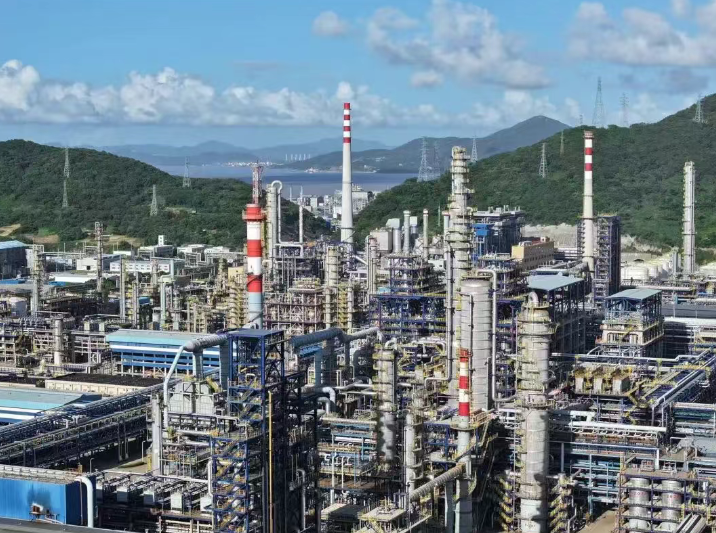
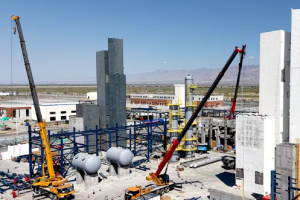
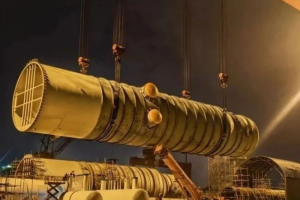
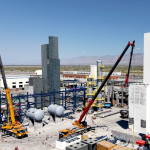
It is reported that the total investment of the Daxie Petrochemical Project reaches 21 billion yuan. The project construction includes 18 sets of large-scale oil refining and chemical production units, with core products focusing on high-end chemical categories such as polypropylene. These products have extensive and critical applications in fields like new energy vehicle manufacturing and the electronic information industry. Since the official start of construction in July 2022, the construction team has relied on independently developed new construction technologies to significantly improve construction efficiency. Eventually, the overall construction period was shortened by 90 days, and at the same time, a new record for the hoisting period of similar domestic petrochemical projects was set, fully demonstrating the technical strength and management level of China’s petrochemical engineering construction. In terms of raw material supply, the project adopts a strategy that mainly uses medium and light crude oil extracted from China’s offshore areas, supplemented by imported crude oil. It also applies the advanced “deep catalytic cracking” technology to extend towards the high-value-added links in the downstream of the chemical industry chain. After putting into operation, the project’s annual crude oil processing capacity can reach 12 million tons, and it can stably produce million-ton-level olefin and aromatic products.
According to the Color Masterbatch Industry Network, the value of the Daxie Petrochemical Integration Project is not only reflected in the upgrading of production capacity scale but also in the achievement of multiple key breakthroughs in the field of refining and chemical technology. It has successfully overcome a number of “chokepoint” technical problems in this field and built the country’s largest heavy oil-to-olefin plant, opening up a key channel for the high-value utilization of heavy oil and providing core technical support for the independent and controllable development of China’s high-end chemical material industry chain. Public data shows that heavy oil is a viscous residue produced after the initial processing of crude oil. Due to its high impurity content and complex processing technology, it has long been regarded as “low-value waste” in the industry. In traditional processing technology, heavy oil requires multiple intermediate treatment links, which is not only cumbersome but also results in relatively low added value of the final products.
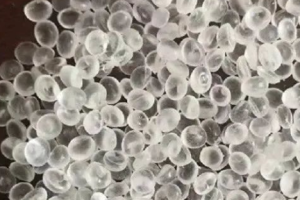
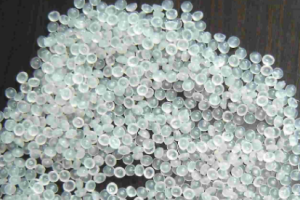
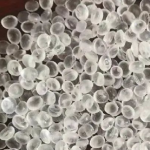
However, through continuous technological innovation, Daxie Petrochemical has successfully achieved a breakthrough in heavy oil processing technology, enabling it to directly convert heavy oil into polymer-grade ethylene and propylene. As core raw materials in the high-end chemical field, polymer-grade ethylene and propylene are the key “sources” for the production of high-end plastics, synthetic rubber, chemical fiber clothing and other products. This technological breakthrough has completely changed the traditional positioning of heavy oil and truly opened up the transformation channel from heavy oil “waste” to “high-value resources”. The core unit put into operation in this project – the 3.2 million tons/year catalytic cracking unit – is currently the largest heavy oil-to-polymer-grade olefin equipment in China. Its high-purity ethylene and propylene products can be widely used in the production of daily necessities such as mineral water bottles and food packaging bags, and can also meet the raw material needs of high-end manufacturing fields such as automotive lightweight plastics and high-end cable materials. After the official operation of this unit, Daxie Petrochemical’s annual olefin production capacity has reached 1.8 million tons, making it the largest heavy oil-to-olefin industrial base in China.
In addition, the Daxie Petrochemical Project also focuses on two core industrial directions of polypropylene and polyethylene, and conducts key technological research on high-end strategic new materials such as recyclable cable materials and ultra-high molecular weight polyethylene. At present, it has gradually formed a full-chain innovation ecosystem from technology research and development, pilot verification to industrial implementation, and successfully opened up a complete transformation chain from “laboratory technical achievements to industrial production lines”, laying a solid foundation for the sustainable development of China’s high-end chemical new material industry.