




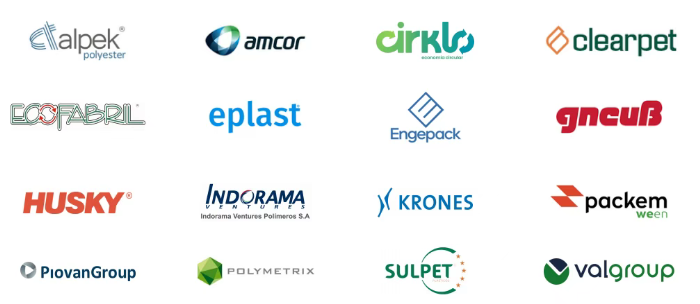
August 30, 2025 – Brazil has made remarkable strides in the field of PET plastic recycling, according to recent industry data. In 2024, the country successfully recycled 410,000 tons of post-consumer PET plastic, representing a 14.2% increase compared to the last recorded figure in 2021. This achievement can be attributed to the in-depth research and promotion efforts of the Brazilian PET Industry Association (ABIPET). For this initiative, ABIPET commissioned a survey covering 142 companies, whose PET recycling volume accounts for 84% of Brazil’s total national recycling output. Notable names among these companies include industry leaders such as Valgroup, Krones, Indorama Ventures, Husky, Gneuss, Amcor, and Cirklo.
In terms of recycled PET applications, bottle-to-bottle recycling emerged as the largest application segment for the first time in 2024. Statistics show that preforms and bottles accounted for 37% of recycled PET usage, marking a significant upward trend compared to 29% in 2021 and 24% in 2019. This shift is also reflected in the market: in 2024, as many as 13 billion bottles containing recycled PET re-entered the market, highlighting the enormous potential of bottle-to-bottle recycling. Beyond bottle-to-bottle applications, recycled PET found widespread use in other sectors in 2024, with textiles accounting for 24%, chemicals for 13%, coils and sheets for 13%, and strapping tapes for 10%.
According to the Color Masterbatch Industry Network, Brazil’s PET recycling chain has also delivered impressive economic results, generating 5.66 billion Brazilian reals (approximately 893 million euros) in economic benefits last year. However, Brazil’s PET recycling model has unique characteristics. Due to the lack of a centralized and unified waste collection system, the country’s PET waste collection mainly relies on informal waste recyclers. Waste dealers, cooperatives, and individual waste pickers handle 89% of Brazil’s total PET collection. In terms of raw material supply proportion in 2024, waste dealers contributed 54% of PET waste raw materials, cooperatives accounted for 33%, and individual collectors made up 2%. Meanwhile, these groups also received 59% of the income generated from PET recycling, playing an indispensable foundational role in Brazil’s PET recycling industry.
Despite the outstanding achievements in PET recycling, the overall plastic recycling situation in Brazil is less optimistic. Surveys have once again confirmed that PET is the most recycled plastic type in the country. In 2023, PET recycling volume accounted for a high 47.9% of the total plastic recycling volume, far exceeding other plastic types such as HDPE (28.1%), EPS (25.6%), and PP (17.2%). Regrettably, Brazil’s overall plastic recycling rate dropped to 20.6% in 2023, the lowest level since records began in 2018. Similar to the situation faced by Europe, this decline is mainly attributed to weak market demand and fierce competition caused by falling costs of virgin plastics—factors that have severely restricted the development of Brazil’s overall plastic recycling industry.