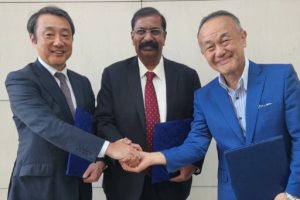
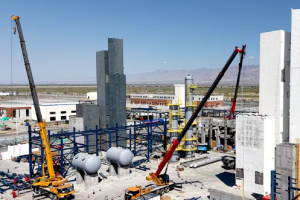
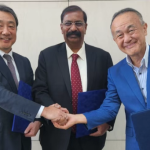
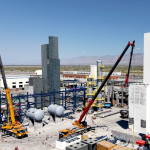
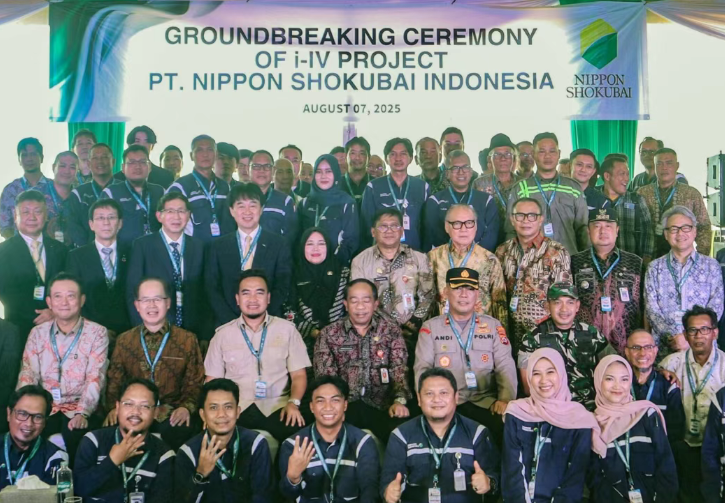
August 30, 2025 – A major development in the global superabsorbent polymer (SAP) market has recently drawn widespread industry attention. On August 7, 2025, PT. Nippon Shokubai Indonesia (NSI), the Indonesian subsidiary of Japan’s Nippon Shokubai Co., Ltd., held a grand groundbreaking ceremony for the expansion of its SAP production facilities in Cilegon, Banten Province, Republic of Indonesia. This move not only reflects Nippon Shokubai’s continued optimism about the Asian market but also signals an upcoming round of adjustments in the global SAP capacity layout.
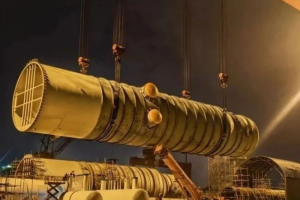
The expansion plan was first announced back in August 2024. Under the blueprint, the new facility will have an annual SAP production capacity of 50,000 tons. Once completed, when combined with NSI’s existing 90,000-ton annual capacity, NSI’s total SAP output will jump to 140,000 tons per year. The entire project is expected to cost approximately 110 million U.S. dollars, with construction scheduled to run until the end of January 2027, followed by the start of commercial operations in July 2027.
(Image Source: Nippon Shokubai)
SAP, a material with special properties, is primarily used in disposable hygiene products such as diapers and constitutes one of Nippon Shokubai’s core business segments. Currently, global demand for SAP is growing strongly, with Asia emerging as a key driver of this market growth. For years, the Nippon Shokubai Group has actively expanded its global industrial footprint, establishing SAP production bases in Japan, the United States, Europe, China, and Indonesia, among other regions, to build an extensive and efficient global supply network. Notably, in a bid to optimize its global SAP supply chain, Nippon Shokubai previously shut down its outdated and inefficient SAP plant in Himeji, redirecting resources to the construction and operation of more competitive production bases.
According to the Color Masterbatch Industry Network, NSI’s SAP capacity expansion is no coincidence. Amid sustained strong market demand for SAP, Nippon Shokubai has decided to leverage NSI’s existing acrylic acid production capacity. Acrylic acid, a critical raw material for SAP manufacturing, plays a vital role in ensuring stable SAP production. As early as 2023, NSI completed an expansion of its acrylic acid capacity, increasing its annual output to 240,000 tons. By tapping into this raw material advantage to further expand SAP production, Nippon Shokubai is set to strengthen its competitiveness in the global market. Once NSI’s SAP expansion project is fully realized, Nippon Shokubai’s global SAP capacity will rise from the current 710,000 tons per year to 760,000 tons per year, further solidifying its position as a leading global SAP supplier.
Looking at Nippon Shokubai’s financial performance, its sales revenue in the second quarter of 2025 reached 101.2 billion yen, a 3.7% decrease compared to the same period last year. The company attributed this decline primarily to the expanding SAP market and intensifying competitive pressures. In such a market environment, scaling up production to enhance economies of scale and strengthen market influence has become a key strategy for Nippon Shokubai to tackle challenges.
Established in August 1996, NSI has maintained steady development. Both its headquarters and factory are located in Cilegon, Banten Province, Republic of Indonesia, focusing on the manufacturing and sales of acrylic acid, acrylates, and superabsorbent polymers. The company has a capital of 120 million U.S. dollars (paid-in capital), with Nippon Shokubai holding a 99.9% stake. Currently, NSI employs 449 staff members.
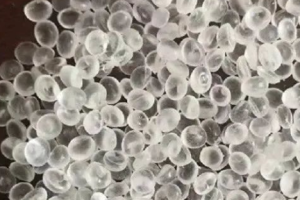
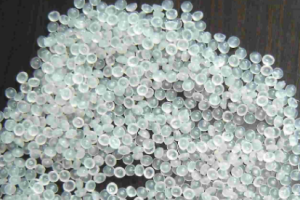
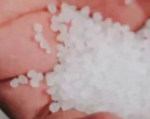
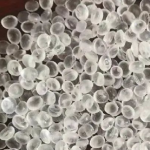
Chemically, superabsorbent resin (SAP) is a hydrophilic polymer compound with a loose network structure and low cross-linking density, also known as superabsorbent material or water-absorbent gel material. Its standout feature is its ability to absorb hundreds to thousands of times its own weight in water. It not only absorbs water quickly but also exhibits excellent water retention—even under pressure, the absorbed water is hard to separate. Additionally, it is insoluble in organic solvents and boasts high expandability and ammonia absorption properties, making it widely applicable in various fields.
Tracing the commercialization of SAP, Sanyo Chemical Industries became the first in the world to commercially produce SAP in 1978. In 2001, San-Dia Polymers Co., Ltd. (now SDP Global Co., Ltd., referred to as SDP) was officially established. In 2003, Sansyo Fine Chemicals (Nantong) Co., Ltd.—China’s first SAP manufacturer invested in by a Japanese enterprise—was founded. In 2018, SDP GLOBAL (Malaysia) Sdn. Bhd. was established in Malaysia. After 2002, a large number of foreign enterprises entered the Chinese market, including Japan’s Nissho Chemical (invested by Nippon Shokubai), Sansyo Fine Chemicals, and Singapore’s Yixing Dansen Technology. Leveraging stable upstream raw material supply and advanced production technology, these companies gradually grew into major SAP resin producers in China, with single-line production capacities reaching 30,000 tons.
Since 2011, Chinese enterprises have made key breakthroughs in SAP production technology. Companies such as Satellite Petrochemical, Shanghai Huayi Group, Yangzi-BASF Petrochemical, Wanhua Chemical, and Shenghong Petrochemical have all entered the SAP sector, ushering in a new investment boom in China’s SAP resin industry. According to incomplete statistics, by the end of 2024, the global existing and planned SAP capacity had exceeded 5 million tons per year, with a large number of major producers in the industry.
In the course of industry development, enterprises have continuously adjusted their strategic layouts. While Evonik and Sanyo Chemical Industries have sold off their SAP businesses, companies like Nippon Shokubai, BASF, and Satellite Chemical have actively expanded their presence. For example, on January 22 this year, Nantong Jiangtian Chemical Co., Ltd. issued an announcement on the completion of asset transfer for a major restructuring, acquiring 100% equity of Sansyo Fine Chemicals (Nantong) Co., Ltd. from SDP in cash. After the transaction, Jiangtian Chemical gained an annual SAP capacity of 230,000 tons. In addition, Evonik announced the completion of the sale of its SAP business to ICIG (International Chemical Investment Group) in September 2024; BASF finished the upgrade and renovation of its SAP plant in Freeport, Texas, USA, in October 2024; and in January this year, Satellite Chemical signed a contract for a 300,000-ton annual superabsorbent resin project. With the launch of Satellite Chemical’s project, the capacity pattern of domestic SAP producers is poised for new changes—Wanhua Chemical and Satellite Chemical are expected to become strong contenders for the top spot in SAP capacity, while Huayi Group and Jiangtian Chemical are also likely to join the ranks of enterprises with an annual capacity of 200,000 tons or more.
Although domestic SAP enterprises have developed rapidly in recent years, there remains a significant gap in capacity scale compared with international giants. While seizing market opportunities brought by the withdrawal of competitors, domestic enterprises also need to be wary of risks such as weak growth in procurement demand due to insufficient downstream demand and profit compression from low-price competition. However, driven by factors such as the gradual aging of the population, changing consumer attitudes, and external support including standardized production and continuous promotion, the SAP market is expected to see new growth drivers in the future, and the industry’s development prospects remain promising.