









August 30, 2025 – Titanium dioxide (commonly known as titanium white powder), a vital member of the inorganic filler family with both functional and general-purpose properties, is gradually breaking free from the traditional perception of “only being used for coloring” in the rubber industry. In the R&D and production process of rubber products, it has become a core element connecting the product’s appearance presentation and long-term performance, and its diverse value far exceeds that of a single-functional additive. Compared with carbon black, which mainly functions as a reinforcing agent, and ordinary inorganic fillers that focus on cost control, titanium dioxide, relying on its excellent whiteness and hiding power, provides irreplaceable appearance optimization solutions for light-colored and white rubber products such as medical gloves, tire side rubbers, and home appliance seals. Next, this article will comprehensively analyze various core action mechanisms of titanium dioxide in the rubber formula system.
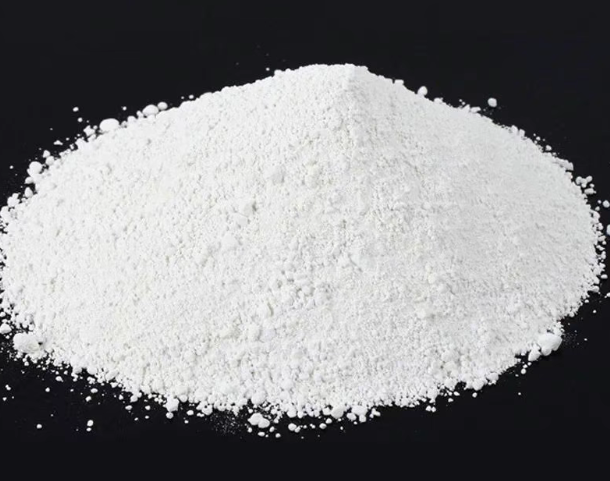
In terms of coloring function, the advantages of titanium dioxide are particularly prominent. Firstly, it is globally recognized as the top-performing white pigment at present, with extremely high whiteness and gloss. In the production of products such as white rubber hoses and colored rubber shoe soles, titanium dioxide can make the products present bright and pure colors, meeting the market’s diverse needs for the appearance of rubber products. Secondly, its hiding power is excellent, which can effectively cover the color of the rubber raw material itself or impurities mixed in the production process, ensuring the uniform color of the final product. Among them, rutile titanium dioxide, due to its dense structure, strong stability, low optical activity, and good weather resistance, not only has higher hiding power and tinting strength, but also can help rubber products resist the impact of sunlight and atmospheric environment, avoiding problems such as discoloration, chalking, and loss of luster. Therefore, it is widely used in rubber products with strict weather resistance requirements such as automobile tires.
According to the Color Masterbatch Industry Network, titanium dioxide also plays a key reinforcing role in rubber formulations. From the perspective of improving mechanical properties, adding titanium dioxide can significantly enhance the mechanical indicators of rubber. For example, in polysulfide sealants, as the amount of titanium dioxide added increases, the hardness and tensile strength of the sealant increase simultaneously; in the research on room temperature vulcanized silicone rubber (RTV-SR) composites, it is found that TiO₂ particles with smaller particle size and larger specific surface area can further improve the mechanical properties such as compressive modulus and fracture strain of the composite material. From the perspective of enhancing structural stability, titanium dioxide particles can be uniformly dispersed in the rubber matrix and interact with rubber molecules to form a network-like structure. This structure enables the rubber to disperse stress more efficiently when subjected to external forces, reducing the generation and expansion of internal defects and cracks, thereby improving the durability and reliability of rubber products.
The anti-aging effect is also an important manifestation of the value of titanium dioxide in the rubber industry. On the one hand, when rubber products are exposed to sunlight for a long time, ultraviolet rays will cause the breakage and cross-linking of rubber molecular chains, leading to aging and performance degradation. Titanium dioxide can absorb and scatter ultraviolet rays, greatly reducing their damage to rubber molecules. For example, after adding surface-modified TiO₂ nanoparticles to silicone rubber, the stability of silicone rubber to ultraviolet-C (UV-C) radiation is significantly improved, and the aging process is significantly delayed. On the other hand, by inhibiting the oxidation reaction caused by ultraviolet rays, titanium dioxide can slow down the aging rate of rubber products, maintain the stability of their physical and chemical properties, and extend their service life. For products that are in harsh environments for a long time, such as automobile tires and outdoor rubber seals, this role of titanium dioxide can ensure their stable operation for a long time.
As an inorganic filler, titanium dioxide also has a filling function. In terms of cost reduction, the price of titanium dioxide is relatively affordable. Adding an appropriate amount of titanium dioxide to the rubber formula can reduce the amount of expensive rubber raw materials, thereby reducing the overall production cost and improving the market competitiveness of the product. At the same time, it can adjust the density and hardness of the rubber according to needs to adapt to different application scenarios. In terms of improving processing performance, filling an appropriate amount of titanium dioxide can optimize the processing characteristics of rubber, such as improving the fluidity of the rubber compound and reducing energy consumption during mixing. In the mixing process, titanium dioxide is uniformly dispersed in the rubber matrix, which can make the rubber compound more uniform and stable, creating favorable conditions for subsequent molding processing, thereby improving production efficiency and product quality.
In addition, titanium dioxide has other special functions in rubber products. In terms of improving water resistance, for products that come into contact with water, such as rubber seals and rubber water pipes, adding titanium dioxide can improve their water resistance. Relevant studies have shown that in room temperature vulcanized silicone rubber (RTV) treated with nitrogen dioxide aging, when the composite ratio of surface-functionalized titanium dioxide nanosheets (f-TNS) is 0.3 wt.%, the composite sample has the lowest water permeability, the best nitrogen dioxide corrosion resistance, increased impedance modulus, and reduced porosity, which fully proves that its water resistance has been improved. At the same time, by inhibiting the oxidation reaction caused by ultraviolet rays, titanium dioxide can further delay the performance degradation of rubber products. This function complements the anti-aging function, jointly ensuring the stable performance of rubber products in long-term use, and is particularly significant for rubber products used outdoors.