

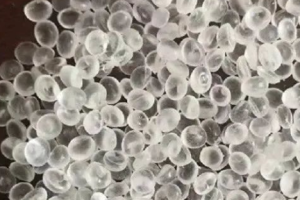
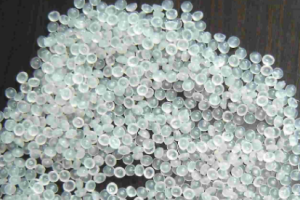

August 30, 2025 – Polyolefins, the backbone of global plastics production, account for 60% of the market—with polyethylene (PE) used in bottle bodies and polypropylene (PP) in bottle caps, touching every corner of modern life from bubble tea cups to car bumpers, phone cases to hospital surgical instruments. Yet for two decades, a high-end variant known as polyolefin elastomer (POE) remained a “pain point” for Chinese manufacturing: 90% of POE demand was met through imports, priced at 50,000 yuan per ton—10 times the cost of ordinary plastics. That all changed in the summer of 2024, when PetroChina dropped a bombshell: its Petrochemical Research Institute had achieved industrial-scale mass production of independently developed “high-performance POE,” shattering foreign monopolies. This breakthrough sent ripples through the materials sector and ignited hope for “independent control” across industries like automotive, medical, and new energy—proving that materials linked to everyday mineral water bottles could be the key to breaking international technological barriers.
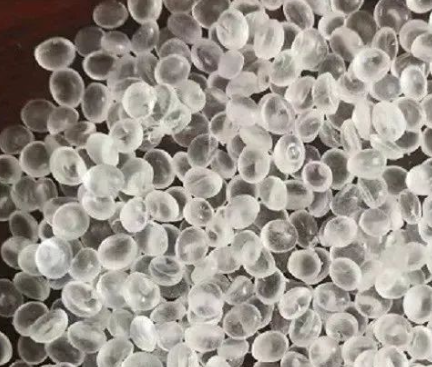
Dubbed the “industrial vitamin,” POE’s importance lies in its hybrid nature: it combines the corrosion resistance and moldability of plastics with the high elasticity and impact resistance of rubber. This unique blend makes it indispensable for high-end manufacturing. Take new energy vehicle (NEV) battery packs, for example: their casings need to be lightweight to reduce vehicle weight while offering strong impact resistance to protect battery safety. Traditional plastics are too brittle, and rubber too heavy—POE strikes the perfect balance, with a density 30% lower than rubber and twice the impact resistance, earning it the title of “golden material” for battery casings. In medical infusion tubes, flexibility is needed to minimize needle insertion pain, and high-temperature resistance to withstand sterilization without deformation. Ordinary plastics are too rigid, and silica gel too costly—POE again emerges as the optimal solution.
As reported by the Color Masterbatch Industry Network, foreign enterprises dominated this “treasured material” for 20 years. U.S.-based Dow, Germany’s BASF, and Japan’s Mitsui controlled 70% of the global market. Chinese companies faced either arbitrary price hikes or supply restrictions when purchasing. A leader at a domestic NEV manufacturer once lamented: “We wanted to upgrade our battery pack materials, but foreign suppliers told us we’d have to wait six months for delivery—that’s time we couldn’t afford.” Compounding the challenge, POE R&D has extremely high barriers: precise control of molecular chain length and branching is required, with even minor deviations drastically reducing performance. Foreign firms guarded their patents fiercely, and after 30 years of laboratory research, Chinese enterprises still couldn’t overcome the “large-scale production” bottleneck—until PetroChina’s breakthrough. Its independently developed “novel catalytic system” and “multi-zone polymerization process” allow precise molecular structure control, akin to “building blocks.” The result? Performance on par with international standards, 20% higher tensile strength, a 50°C wider temperature resistance range, and a 35% reduction in production costs. For the first time, Chinese manufacturing has its “own elastomer.”
Inside PetroChina’s Petrochemical Research Institute laboratory, a silver “twin-screw extruder” hums continuously. Researchers monitor molecular structure diagrams on screens, typing rapidly—this is where high-performance POE is born. Project leader Dr. Chen Min flips through an experiment log filled with notes on “molecular weight distribution deviations” and “insufficient catalyst activity.” “It took us five years and 1,200 experiments—800 of which failed,” he says. The biggest hurdle was “catalyst stability.” Traditional Ziegler-Natta catalysts used in polyolefin production tend to “fail” at high temperatures, causing molecular chain breakage and reduced elasticity. Dr. Chen’s team took a different approach, experimenting with metallocene catalysts—comparable to “precision scissors” for cutting uniform molecular chains. However, metallocene catalysts are extremely sensitive to water and oxygen; even a speck of dust in the lab could derail the reaction. “We moved the lab to a ‘cleanroom’ with air filtration precision of 0.1 microns—1/700 the thickness of a human hair. We even had to wear gas masks while operating,” Dr. Chen recalls with a smile. “Solving catalyst stability alone took two years.”
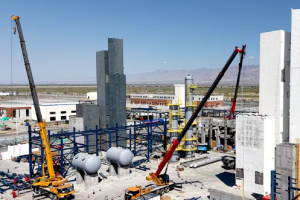
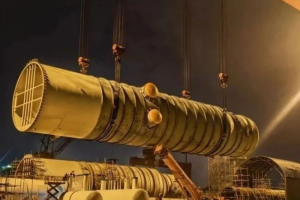
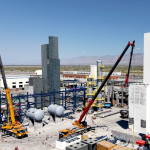
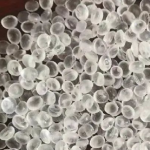
Another challenge was scaling up production. Producing 1kg of samples in a lab is manageable, but ramping up to 100 tons per day in a factory required complete overhauls of equipment, processes, and parameters. PetroChina’s Dushanzi Petrochemical Plant became the testbed: existing PE production lines were retrofitted with “gradient temperature control modules,” requiring precise temperature control between 180°C and 280°C with a margin of error under 2°C. Wang Jianjun, Director of Dushanzi Petrochemical’s Technology Department, explains with a metaphor: “It’s like baking a cake—too much heat burns it, too little leaves it raw. We had to find that ‘golden temperature.’” After six months of adjustments, the first production line operated stably by May 2024, with product qualification rates rising from 70% (lab scale) to 98%. An unexpected bonus came from “technology spillover”: during R&D, the team discovered a “high-transparency polyolefin” byproduct with 92% light transmittance (vs. 80% for ordinary plastics), now used in high-end phone screen protectors. “This shows that breakthroughs in basic research often lead to unexpected ‘byproduct revolutions,’” Dr. Chen notes.
POE mass production has acted like a “magic wand,” activating a trillion-yuan industrial chain from materials to end products. First, cost reduction: domestic enterprises previously paid 50,000 yuan/ton for imported POE; now, domestic POE costs just 32,000 yuan/ton—a 36% drop. A car parts manufacturer calculated that using domestic POE for bumper production cuts unit costs by 15 yuan; with an annual output of 500,000 units, this translates to 7.5 million yuan in annual savings. “We can reinvest these savings into R&D to boost product competitiveness,” the manufacturer’s leader says.
Second, supply chain complementarity: in the past, China’s high-end manufacturing sector faced frequent “chokepoints,” largely due to a lack of key basic materials. Now, POE mass production gives downstream industries “independent choices.” For instance, the medical sector urgently needs “degradable surgical sutures,” which previously relied on imported POE for coatings. With domestic materials, not only can sutures achieve “complete degradation in 180 days,” but costs are also cut by 40%. A medical technology company has already secured its first order, stating: “We’ll launch domestic sutures by the end of the year, breaking foreign monopolies.”
Most importantly, it creates upgrading opportunities. Emerging industries like new energy and semiconductors demand superior material performance—and POE mass production gives China a “breakthrough advantage” in these fields. Take wind turbine blades, which require “light yet strong” materials: traditional elastomers have poor aging resistance, cracking within five years. Modified domestic POE extends aging resistance to over a decade and has already been adopted by suppliers like Goldwind Science & Technology. Li Hong, President of PetroChina’s Petrochemical Research Institute, says: “We used to have to defer to foreign firms; now they’re proactively seeking cooperation with us.”
Challenges remain: domestic POE still lacks variety in high-end grades (e.g., ultra-low-temperature and ultra-oil-resistant variants), with some special properties yet to be optimized. However, Dr. Chen’s team has a clear roadmap: developing 20 new POE types in the next three years, covering new energy, electronics, and aerospace. “Our goal isn’t just to ‘catch up’ with foreign firms—it’s to ‘lead,’” President Li asserts.
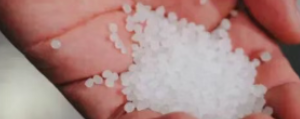
Standing beside Dushanzi Petrochemical’s production line, watching bags of white POE being loaded onto trucks bound for across China, a striking statistic comes to mind: in 2000, China’s polyolefin output was just 8 million tons, with 55% import dependence; by 2024, output exceeded 50 million tons, and import dependence fell to 28%. This isn’t just a numerical shift—it’s evidence of a nation’s transition from a “materials giant” to a “materials power.”
The POE story epitomizes China’s journey in high-end materials R&D. It teaches us: core technologies can’t be waited for, begged for, or bought—but with determination and the courage to tackle tough problems, no barrier is insurmountable. When PetroChina’s researchers fine-tuned catalysts in labs, when Dushanzi Petrochemical’s workers optimized processes in high-temperature workshops, and when downstream enterprises adopted “Chinese elastomers,” we witnessed more than a material breakthrough—we saw a nation’s unwavering commitment to “technological self-reliance.” After all, if we can create materials that once “choked” us, we can build a future where we’re never “choked” again.