





August 30, 2025 – A collaborative research team from the Massachusetts Institute of Technology (MIT) and Duke University has recently made a significant breakthrough in the field of polymer materials. By leveraging a machine learning model to accurately identify specific stress-responsive molecules and applying these molecules to material development, the team has successfully created a new type of polymer material with drastically improved tear resistance.
This innovative strategy for enhancing polymer materials offers a key direction for the development of more durable plastic products. Greater durability means plastics are less likely to break during use, which is expected to reduce the amount of plastic waste generated due to material damage. The core idea behind the research was to identify suitable crosslinker molecules and integrate them into polymer materials. These crosslinkers need to possess special mechanoresponsive properties—able to change their shape or other characteristics when exposed to external forces—thereby enabling the material to withstand greater force before tearing. Recently, the findings of this study were officially published in the academic journal ACS Central Science.
As learned from the Color Masterbatch Industry Network, machine learning played a crucial “accelerator” role in this research. Heather Kulik, a professor in MIT’s Department of Chemistry, explained, “The molecules we identified allow polymer materials to exhibit greater robustness when under stress. Even when subjected to pressure, the material is less prone to cracking or breaking, resulting in a significant improvement in overall toughness.” Notably, the crosslinkers discovered by the research team belong to the ferrocene class of iron-containing compounds, whose mechanoresponsive properties have not received widespread attention or exploration in previous studies. Traditionally, experimentally evaluating a single mechanoresponsive molecule could take several weeks. However, this research confirmed that machine learning models can effectively shorten this process, greatly enhancing the efficiency of molecule screening and evaluation.
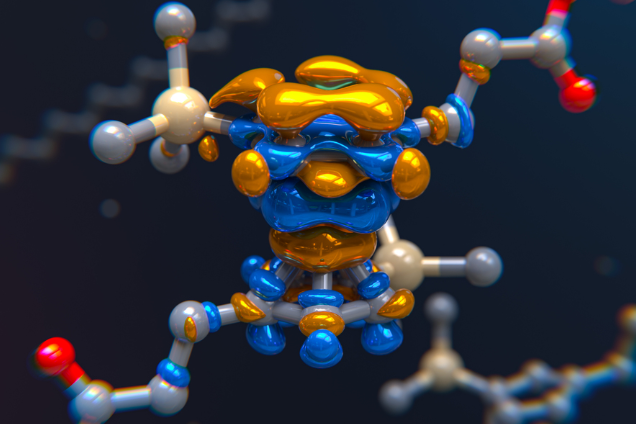
Mechanoresponsive molecules have a unique way of responding to external forces, typically manifested through changes in color, adjustments to molecular structure, or other properties. However, the discovery and characterization of such molecules has traditionally relied either on time-consuming experimental operations or on computationally intensive molecular simulations. Most mechanoresponsive molecules identified so far fall into the category of organic compounds. In contrast, this research turned its attention to ferrocene-based molecules with potential mechanoresponsive properties. These molecules are organometallic compounds, structured with an iron atom at the center and carbon-containing rings attached to either side. By adding different chemical groups to the molecule, their chemical and mechanical properties can be flexibly adjusted.
Although some ferrocene compounds have previously been shown to possess excellent mechanoresponsive capabilities, the relevant properties of the vast majority of similar compounds have not been systematically evaluated. On one hand, testing a single compound through experiments can take several weeks; on the other hand, even using computational simulations, completing an evaluation can take several days. Faced with the need to evaluate thousands of candidate molecules in databases, the research team decided to introduce neural network technology to accelerate the molecule screening process.
The team’s work began with the Cambridge Structural Database, which contains 5,000 synthesized ferrocene compounds. They first selected 400 of these compounds for computational simulations. Through simulations, they quantified the force required to separate the atoms within these molecules, thereby screening out compounds with weak bonds that are prone to breaking—exactly the type needed to improve the tear resistance of materials. Subsequently, the researchers trained a machine learning model based on the simulation data and molecular structure information of these 400 compounds. The trained model performed exceptionally well, successfully predicting the mechanoresponsive thresholds of the remaining 4,500 compounds in the database, as well as an additional 7,000 similar recombined molecules.
Through model analysis and experimental verification, the research team identified two key features that significantly enhance the tear resistance of materials. First, the interactions between the groups attached to the ferrocene ring have a major impact on material performance. Second, when the bicyclic structure of ferrocene is connected to large-volume molecules, it increases the probability of the molecule undergoing responsive breaking under external force. Kulik specifically noted, “The second feature is a groundbreaking discovery that chemists could not have predicted in advance through experience. This conclusion was reached entirely through the analysis and insights of the AI model.”
After screening approximately 100 potential candidate molecules using the model, the research team moved to the laboratory synthesis phase, ultimately creating a polyacrylate plastic using m-TMS-Fc as a crosslinker. Subsequent mechanical performance tests showed that the tear strength of the polymer material using the weak crosslinker m-TMS-Fc was four times that of the polymer material using standard ferrocene as a crosslinker.
Ilia Kevlishvili, a postdoctoral fellow at MIT, emphasized, “This research achievement holds important practical significance. If we can use this technology to make plastic products more resilient, their service life will be effectively extended. In the long run, this will not only reduce the total production of plastic products but also slow down the accumulation of plastic waste, providing strong support for alleviating the problem of plastic pollution.”